
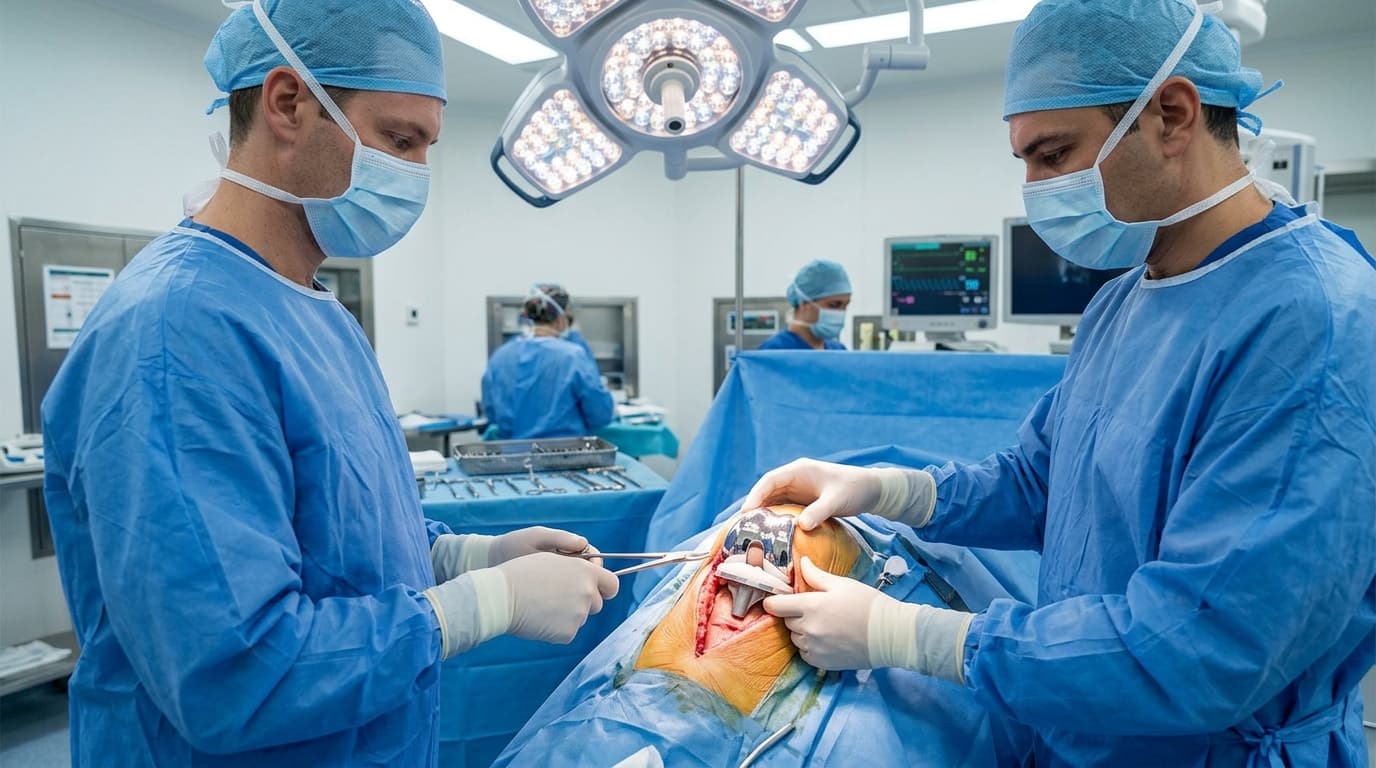

Understanding Total & Partial Knee Replacement
Knee osteoarthritis causes progressive destruction of the joint cartilage, leading to severe bone-on-bone friction, persistent pain, morning stiffness, knee swelling, and angular deformities like bow legs (varus) or knock knees (valgus). When isolated to the medial or lateral compartment with intact cruciate ligaments, a Partial (Unicompartmental) Knee Replacement preserves the remaining healthy bone and ligaments. When multi-compartmental arthritis is present, a Total Knee Replacement completely resurfaces the worn joint surfaces, providing long-lasting stability and complete relief from pain.
Personalized Evidence-Based Clinical Care
Every treatment protocol is tailored specifically to your diagnosis, anatomy, and lifestyle goals, combining cutting-edge surgical precision with structured physiotherapy for optimal long-term outcomes.
When Should You Consider Consultation for Total & Partial Knee Replacement?
Specialist intervention is considered when joint pain or functional limitation significantly disrupts your daily life and conservative measures have been exhausted. Check if you experience any of the following:
Severe knee pain that limits daily walking, stair climbing, or rising from a chair.
Persistent knee pain at rest or during night sleep disrupting quality of life.
Progressive knee bowing (varus or valgus deformity) with joint instability.
Knee stiffness, reduced bending capacity, or grinding bone-on-bone sensation.
Failure to achieve relief through medications, physical therapy, or joint injections.

Dr. Vijay Kumar
Verified SpecialistSenior Consultant Orthopaedic, Robotic Joint Replacement & Complex Articular Trauma Surgeon
“My surgical philosophy centers on biological preservation, anatomical restoration, and rapid functional recovery. By tailoring the intervention to each patient's unique anatomy and lifestyle, we achieve lasting pain relief and active mobility.”
The 4-Stage Precision Clinical Workflow
Comprehensive Clinical & Imaging Diagnosis
Comprehensive digital pre-operative planning to analyze constitutional limb alignment and bone morphology.
Tailored Minimally Invasive Approach
Minimally invasive surgical exposure preserving extensor mechanism and quad muscle integrity.
Anatomical Restoration & Tissue Decompression
Sub-millimetre accurate bone resection and precise ligament tension balancing throughout flexion-extension arc.
Accelerated Functional Rehabilitation
Implantation of premium wear-resistant cobalt-chromium/titanium components with ultra-high molecular weight polyethylene bearings.
Treatment Modalities Offered
Dr. Vijay Kumar practices conservative joint-sparing protocols first, proceeding to advanced surgical intervention only when indicated:
Non-Surgical & Joint Sparing
- Structured quadriceps and hamstring muscle strengthening physiotherapy
- Targeted weight optimization and low-impact cardiovascular conditioning
- Anti-inflammatory analgesics and specialized joint unloading braces
- Intra-articular viscosupplementation or biological therapy for early stages
Specialised Surgical Procedures
- Total Knee Arthroplasty (TKA) for multi-compartmental severe degeneration
- Unicompartmental Partial Knee Replacement (UKA) for isolated single-compartment arthritis
- Patellofemoral Arthroplasty for isolated kneecap cartilage wear
- Computer / Robotic Assisted Knee Arthroplasty for sub-millimetre precision
Recovery Timeline & Mobility Milestones
Day 1: Physiotherapist-guided standing and assisted walking with a walker.
Weeks 1–2: Progressive indoor walking, stair navigation training, and active knee flexion beyond 90°.
Weeks 3–6: Discontinuation of walking aids, return to driving and household activities.
Months 3–6: Full restoration of muscle strength, joint endurance, and active lifestyle.
International Fellowship & Surgical Suite Records
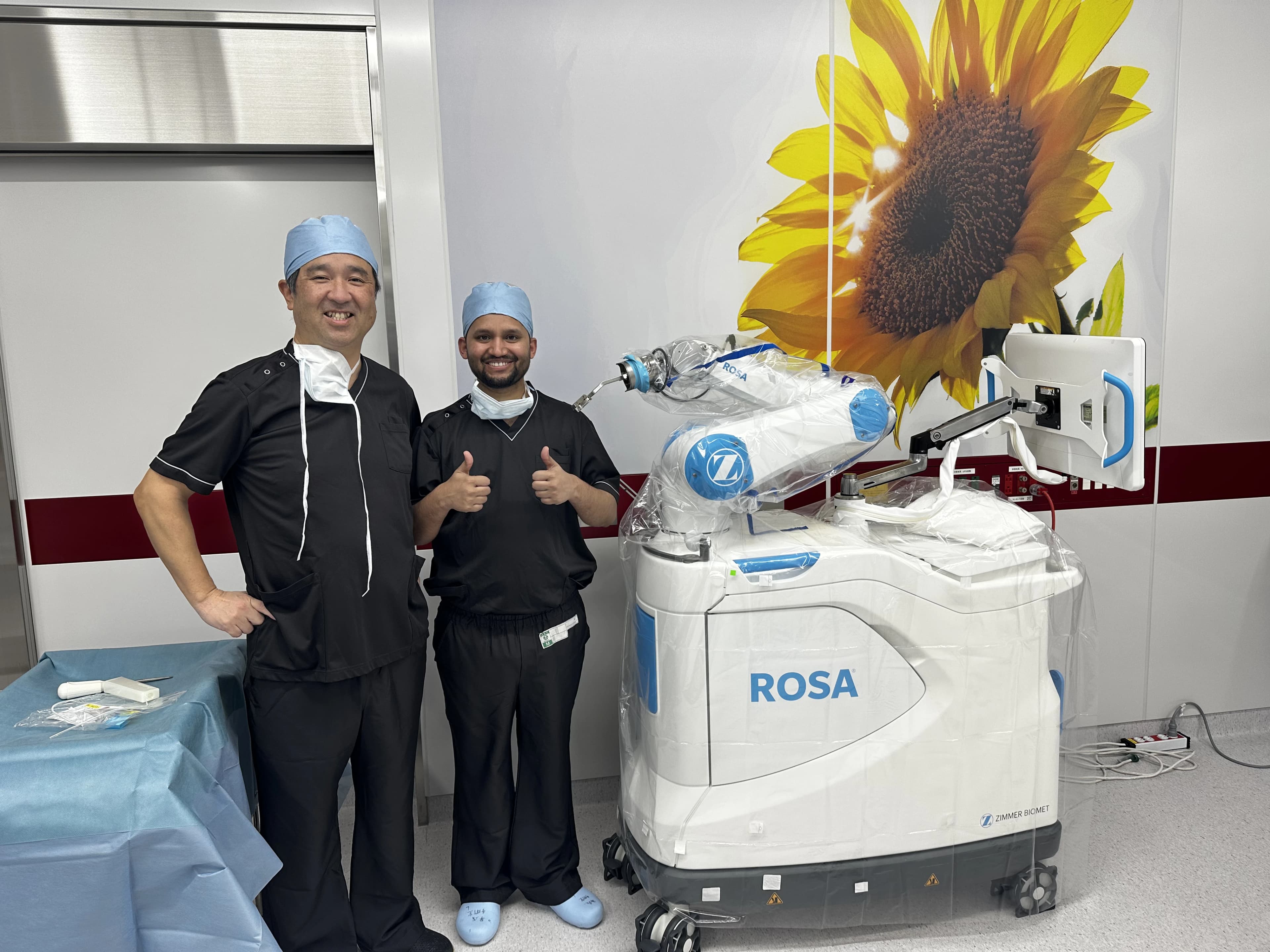
Intraoperative kinematics & 3D navigation alongside Japanese surgical faculty.
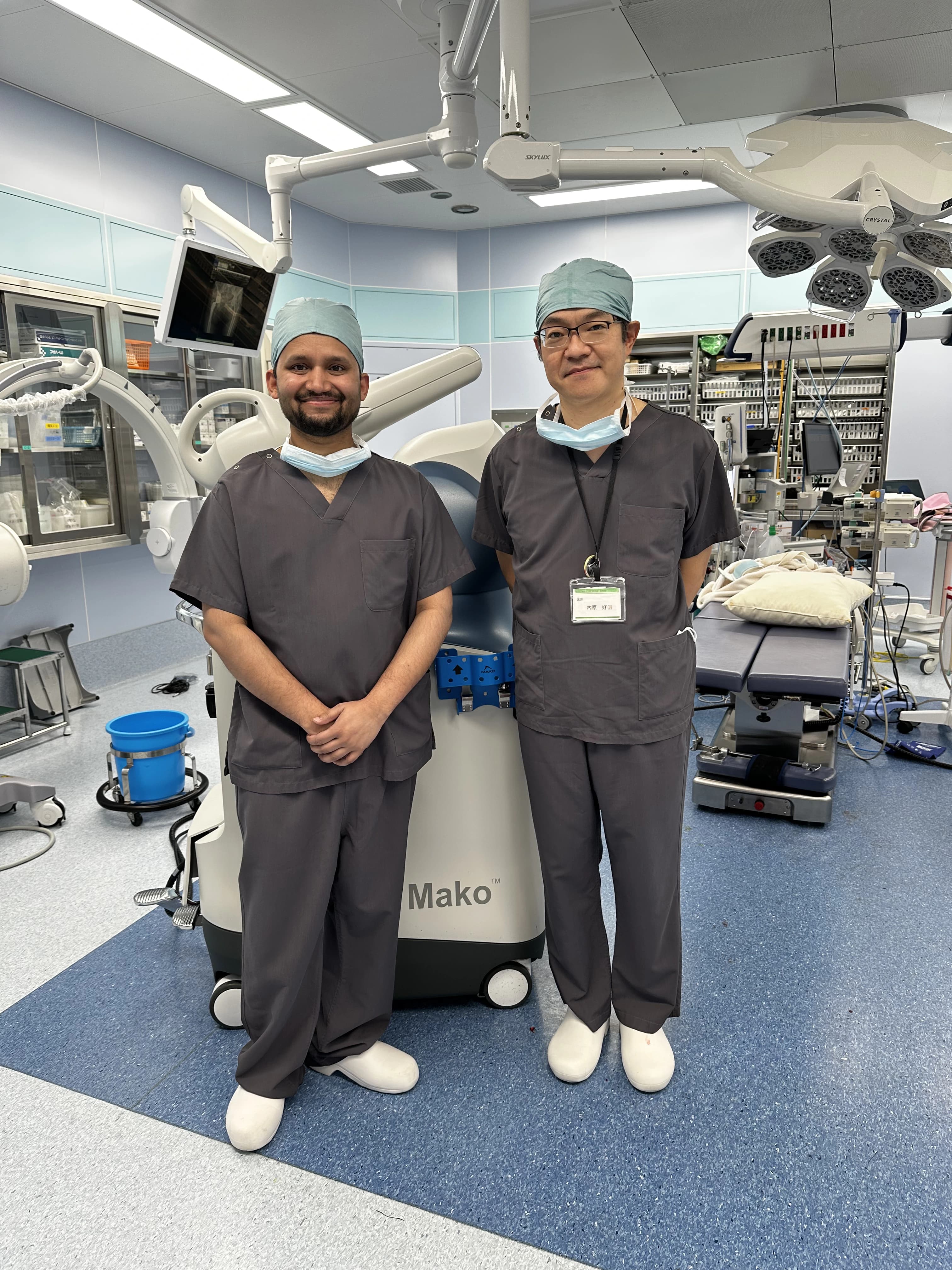
International fellowship-level precision applied to patient care in Patna.
Frequently Asked Questions on Total & Partial Knee Replacement
In a Total Knee Replacement (TKA), all three compartments of the knee joint (medial, lateral, and patellofemoral) are resurfaced with prosthetic components. In a Partial Knee Replacement (UKA), only the single damaged compartment is replaced, leaving the remaining healthy cartilage, bone, and crucial anterior/posterior cruciate ligaments intact for a more natural feeling knee.