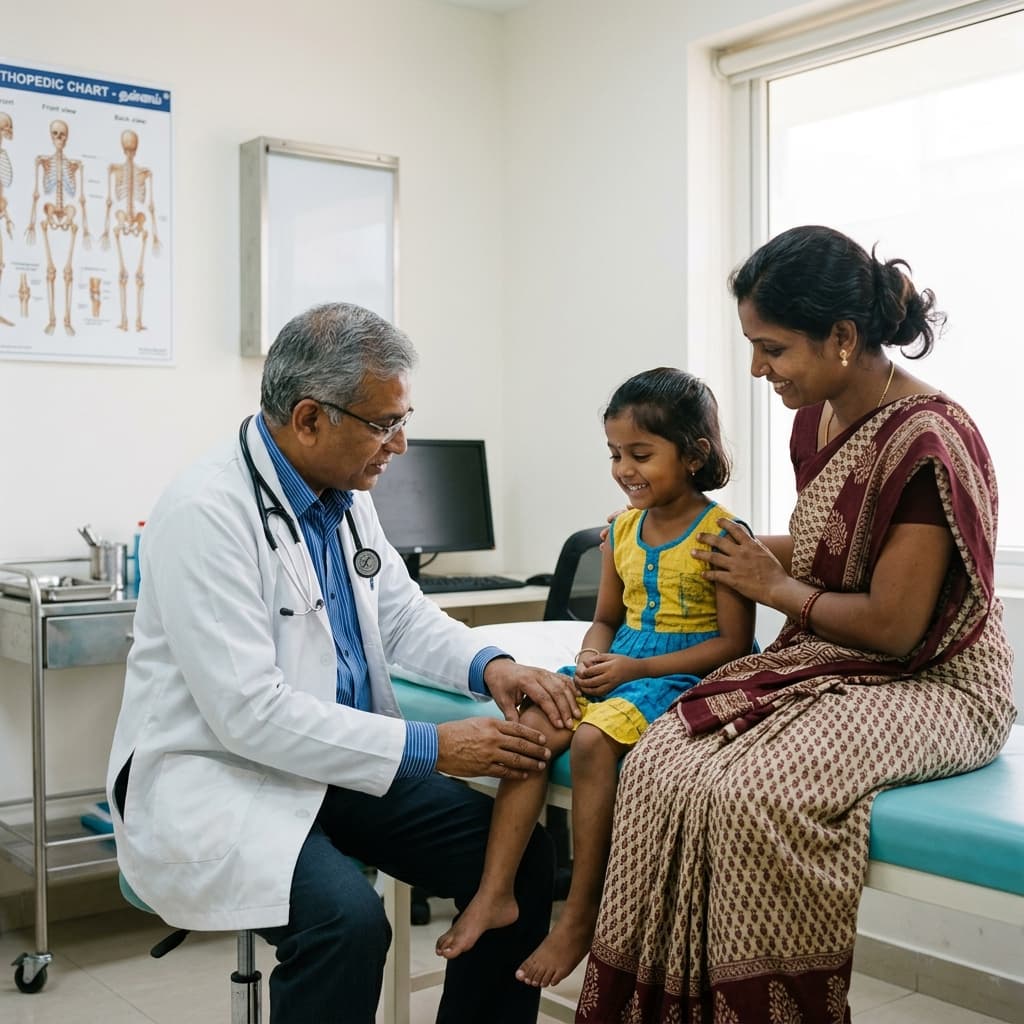

Understanding Pediatric Orthopaedics
Children's bones are actively growing structures with unique growth plates (physes) that behave very differently from adult skeletons. Conditions such as congenital talipes equinovarus (clubfoot), developmental dysplasia of the hip (DDH), knock-knees (genu valgum), bow-legs (genu varum), and paediatric fractures require specialized knowledge to guide natural growth and prevent lifelong limb discrepancies.
The Biological Joint-Sparing Philosophy
By correcting mechanical weight-bearing malalignment through precision osteotomy and cartilage preservation, the load is shifted off damaged cartilage onto healthy bone—preserving your natural joint for years to come.
When Should You Consider Consultation for Pediatric Orthopaedics?
Specialist intervention is considered when joint pain or functional limitation significantly disrupts your daily life and conservative measures have been exhausted. Check if you experience any of the following:
Newborn diagnosed with inward-twisted feet (clubfoot) at birth.
Asymmetrical leg creases, click in the hip, or abnormal walking waddle in an infant/toddler.
Severe bow-legs or knock-knees that are asymmetric or progressively worsening after age 2–3.
Persistent limping or refusal to bear weight without an obvious traumatic cause.
Fractures involving or near the growing growth plates (physeal injuries).
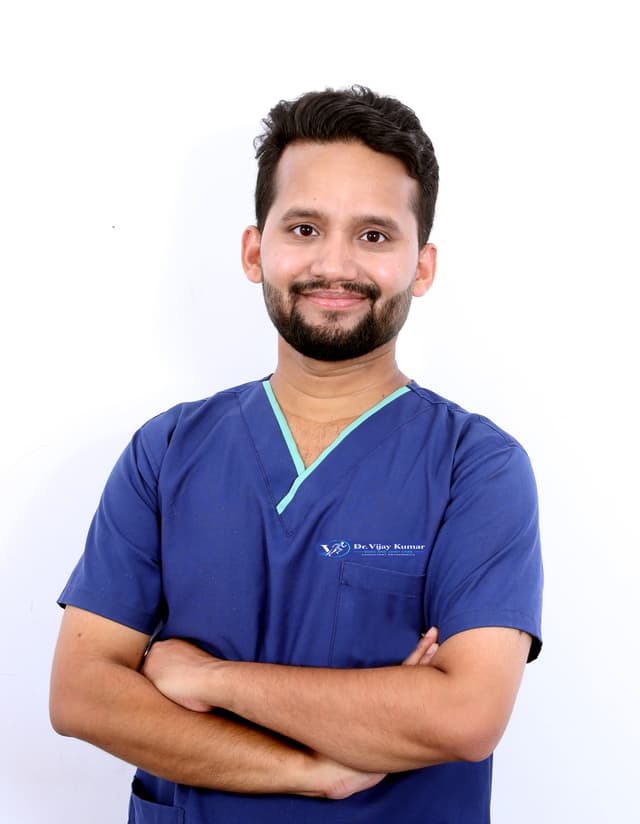
Dr. Vijay Kumar
Verified SpecialistSenior Consultant Orthopaedic, Robotic Joint Replacement & Complex Articular Trauma Surgeon
“My surgical philosophy centers on biological preservation, anatomical restoration, and rapid functional recovery. By tailoring the intervention to each patient's unique anatomy and lifestyle, we achieve lasting pain relief and active mobility.”
The 4-Stage Precision Clinical Workflow
Full-Leg Weight-Bearing Alignment Analysis
Thorough pediatric developmental assessment in a reassuring, child-friendly environment.
Precision Biplanar Osteotomy Planning
Gentle Ponseti manipulation and weekly plaster cast application for clubfoot.
Rigid Locking Plate Stabilization
Minimally invasive guided growth plate insertion that gently redirects bone growth over 6–18 months.
Protected Unloading & Gradual Rehabilitation
Strict avoidance of unnecessary invasive surgery during physiological growth phases.
Treatment Modalities Offered
Dr. Vijay Kumar practices conservative joint-sparing protocols first, proceeding to advanced surgical intervention only when indicated:
Non-Surgical & Joint Sparing
- Ponseti method serial corrective casting and foot abduction bracing for clubfoot
- Pavlik harness application for early developmental hip dysplasia
- Observation and serial clinical scanograms for physiological torsional variations
- Gentle closed reduction and child-friendly waterproof casting
Specialised Surgical Procedures
- Percutaneous Achilles Tenotomy for complete clubfoot correction
- Temporary hemiepiphysiodesis (guided growth using 8-plates) for angular knee deformities
- Open reduction and pelvic/femoral osteotomies for late-diagnosed DDH
- Elastic Stable Intramedullary Nailing (ESIN) for paediatric long bone fractures
Recovery Timeline & Mobility Milestones
Weeks 1–6: Weekly cast changes gently correcting clubfoot components.
Post-Tenotomy: 3 weeks in final cast, followed by night/nap-time abduction brace.
Guided Growth: Routine child play and sports immediately after small 8-plate surgery.
Long-term: Normal running, school sports, and active childhood development.
International Fellowship & Surgical Suite Records
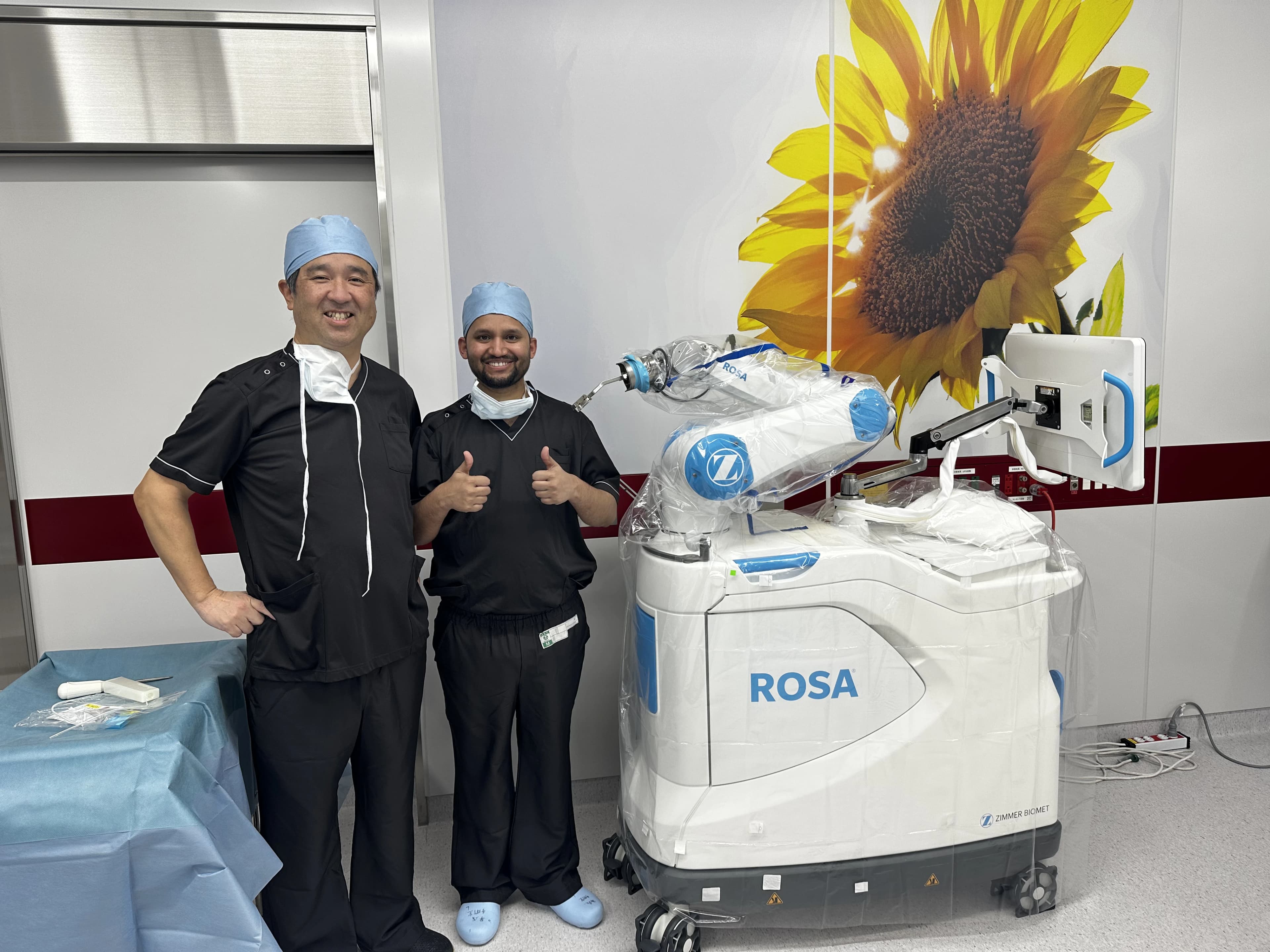
Intraoperative kinematics & 3D navigation alongside Japanese surgical faculty.
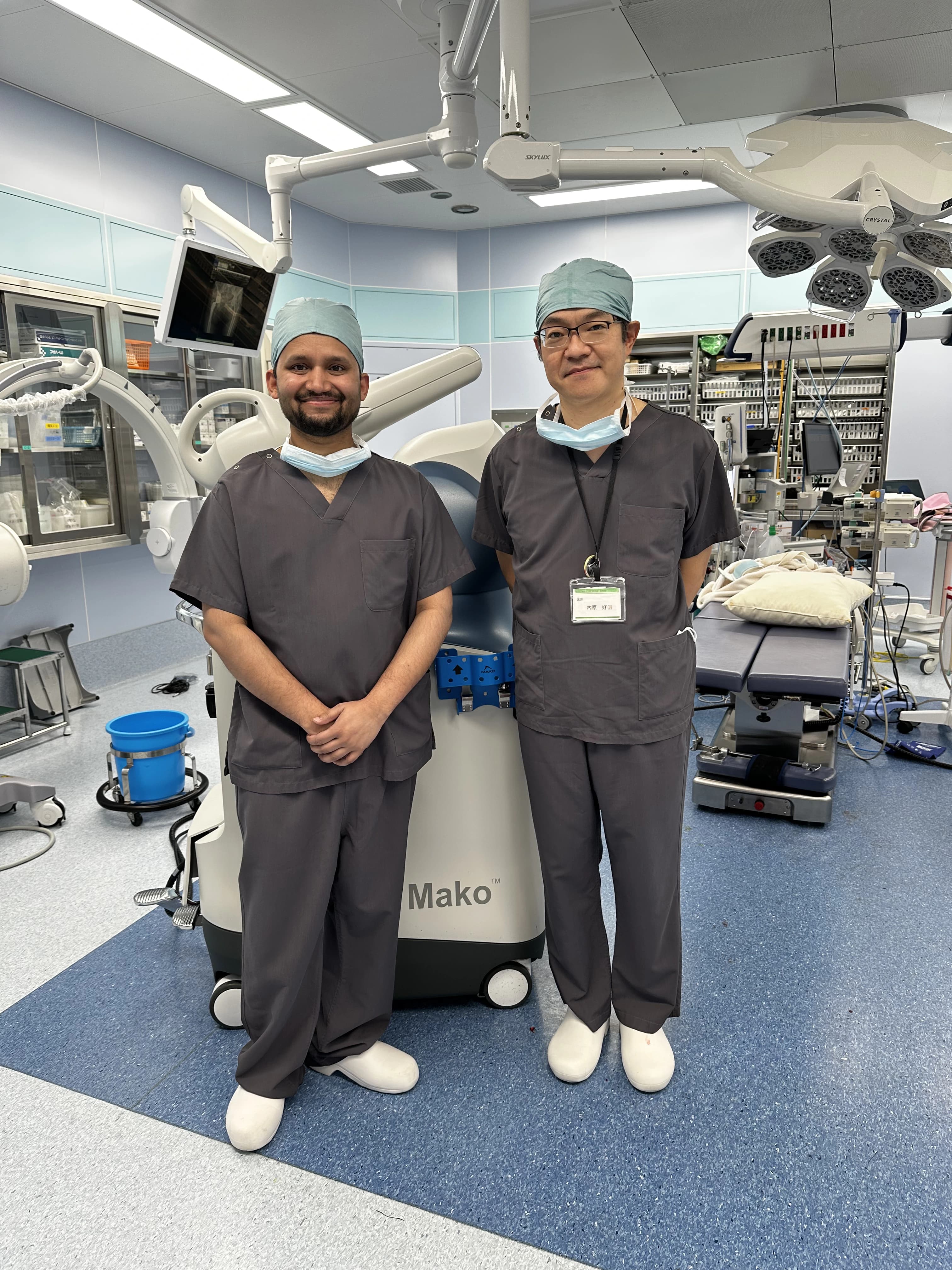
International fellowship-level precision applied to patient care in Patna.
Frequently Asked Questions on Pediatric Orthopaedics
Mild bow legs are common up to age 2, and knock knees are common between ages 3 and 5 as part of normal growth. However, if the curvature is severe, involves only one leg, causes a prominent limp, or progressively worsens, a formal orthopaedic evaluation is recommended.