
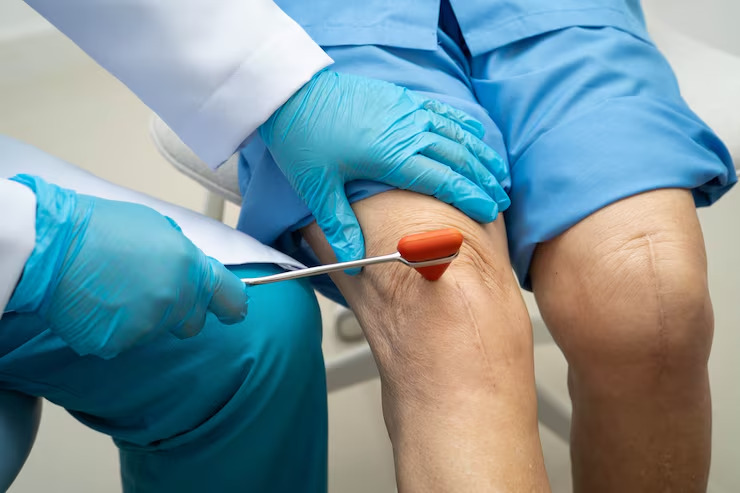

Understanding Meniscus Suture Repair & Meniscal Transplantation
The medial and lateral menisci are crescent-shaped shock absorbers that cushion the knee and distribute up to 70% of joint loads. Removing the meniscus triples peak contact stress on knee cartilage, leading directly to early osteoarthritis. Modern arthroscopic surgery prioritizes biological preservation—repairing bucket-handle tears, root tears, and ramp lesions with high-strength sutures and anchors.
The Biological Joint-Sparing Philosophy
By correcting mechanical weight-bearing malalignment through precision osteotomy and cartilage preservation, the load is shifted off damaged cartilage onto healthy bone—preserving your natural joint for years to come.
When Should You Consider Consultation for Meniscus Repair & Transplant?
Specialist intervention is considered when joint pain or functional limitation significantly disrupts your daily life and conservative measures have been exhausted. Check if you experience any of the following:
Sharp pain along the inner or outer joint line after a twisting movement or squat.
Mechanical clicking, catching, or true knee locking.
Recurrent swelling and joint line tenderness flaring up after walking or stairs.
MRI confirmation of a bucket-handle, radial, or meniscal root tear.
Concurrent ACL tear requiring comprehensive meniscus stabilization.

Dr. Vijay Kumar
Verified SpecialistSenior Consultant Orthopaedic, Robotic Joint Replacement & Complex Articular Trauma Surgeon
“My surgical philosophy centers on biological preservation, anatomical restoration, and rapid functional recovery. By tailoring the intervention to each patient's unique anatomy and lifestyle, we achieve lasting pain relief and active mobility.”
The 4-Stage Precision Clinical Workflow
Full-Leg Weight-Bearing Alignment Analysis
4K arthroscopic assessment of tear pattern, vascular zone, and tissue quality.
Precision Biplanar Osteotomy Planning
Preparation of tear edges to stimulate biological bleeding.
Rigid Locking Plate Stabilization
Passage of high-tensile sutures securing torn meniscus back to joint capsule or root.
Protected Unloading & Gradual Rehabilitation
Verification of stability through full range of motion under optical view.
Stage 05: Joint Preservation Stage
Post-operative protocol combining early protected motion with controlled weight bearing.
Treatment Modalities Offered
Dr. Vijay Kumar practices conservative joint-sparing protocols first, proceeding to advanced surgical intervention only when indicated:
Non-Surgical & Joint Sparing
- Physical therapy for stable, non-displaced degenerative tears
- Hamstring and quadriceps dynamic stabilization
- Activity modification avoiding deep squatting and pivoting
- Short-term anti-inflammatory therapy
Specialised Surgical Procedures
- All-Inside Arthroscopic Meniscus Suture Repair
- Inside-Out / Outside-In Suture Techniques
- Transtibial Meniscal Root Anchor Fixation
- Meniscal Allograft Transplantation (MAT)
Recovery Timeline & Mobility Milestones
Weeks 1–4: Range of motion 0°–90° in hinged brace; protected touch-down weight bearing.
Weeks 5–8: Weaning off crutches and brace; progressive full flexion.
Months 3–4: Cycling, swimming, elliptical conditioning.
Months 5–6: Sport-specific agility drills and return to cutting sports.
International Fellowship & Surgical Suite Records
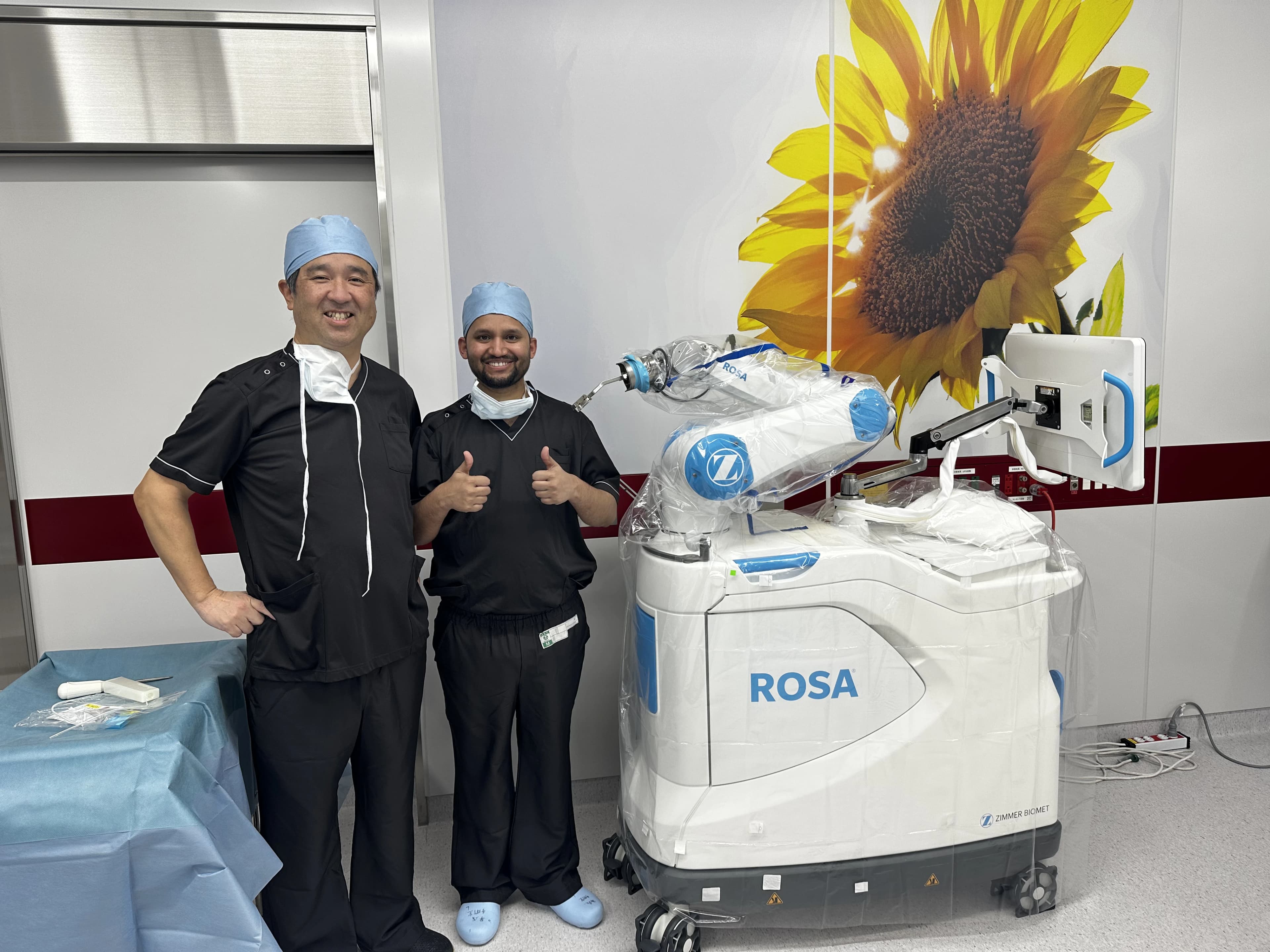
Intraoperative kinematics & 3D navigation alongside Japanese surgical faculty.
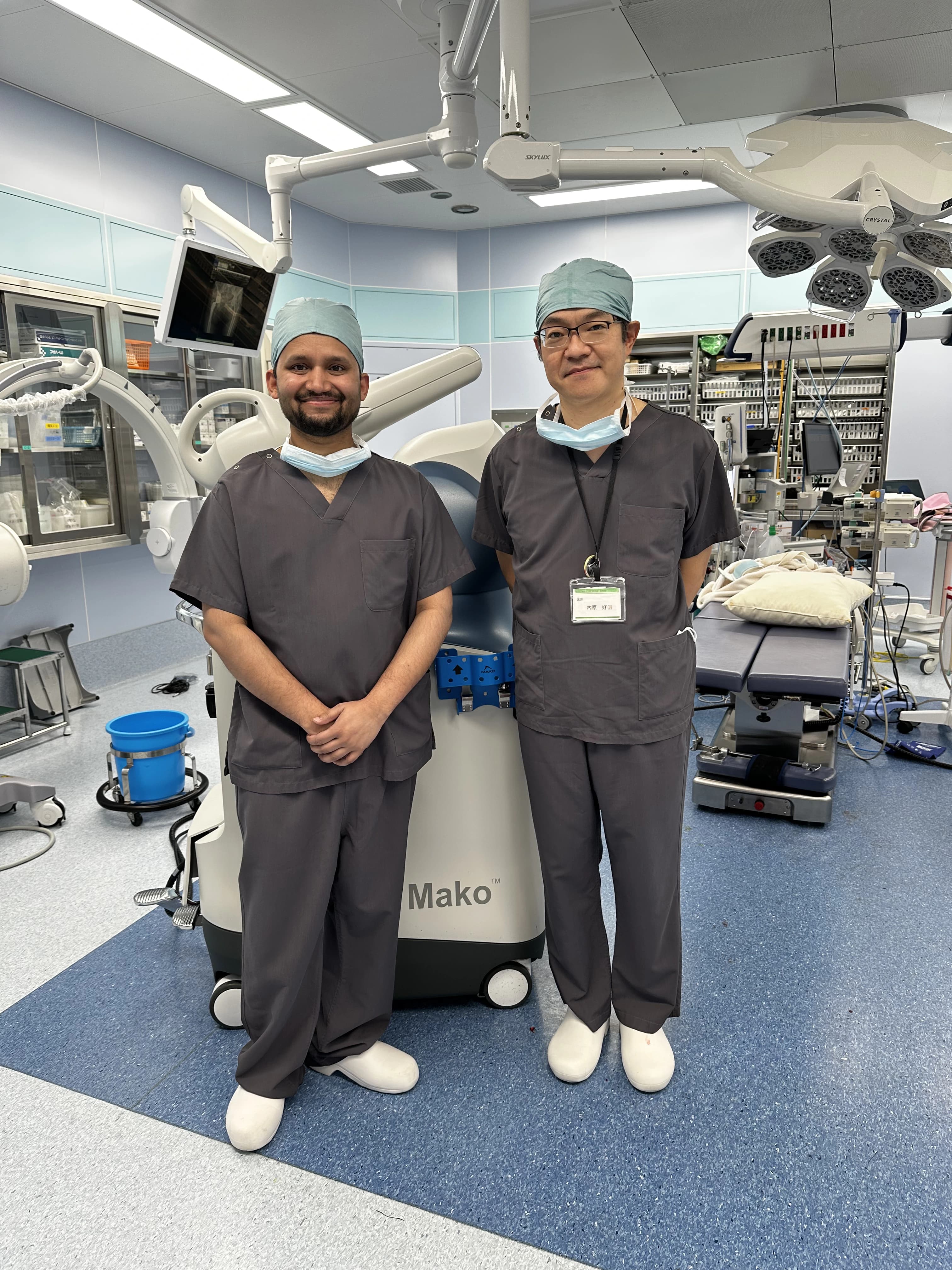
International fellowship-level precision applied to patient care in Patna.
Frequently Asked Questions on Meniscus Repair & Transplant
Tears in the outer vascular zone and root tears have excellent healing potential and should always be repaired. Degenerative complex tears in the avascular white zone may require selective partial trimming.